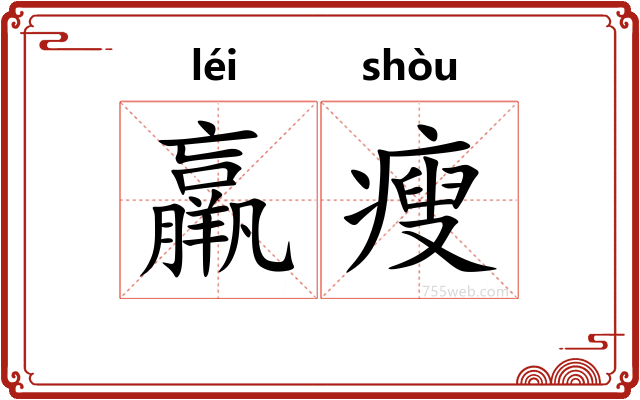
支持模糊查询,支持通配符和拼音查询, 帮助 。
瘦弱。
例面容赢瘦。
英thin and weak; emaciated; frail; be haggard and weak;
瘦瘠。
引《汉书·赵充国传》:“从今尽三月,虏马羸瘦,必不敢捐其妻子於他种中,远涉山河而来为寇。”南朝•宋 刘义庆 《世说新语·德行》:“孔 时为太常,形素羸瘦。”《红楼梦》第八十回:“竟酿成乾血之症,日渐羸瘦。”
衰弱消瘦。
引《三国演义·第五二回》:「吾观刘琦过于酒色,病入膏肓,见今面色羸瘦,气喘呕血;不过半年,其人必死。」《初刻拍案惊奇·卷二八》:「服药十来日,冯相病已好了,却是羸瘦了好些,拄了杖才能行步。」
拼音:léi shòu
意思是瘦弱。
["①体内含脂肪少,肌肉不丰满,与“胖”、“肥”相对。如 ~溜(“溜”读轻声)。~弱。~小。~削。~俏。~长( cháng )。~瘪。消~。清~。~骨嶙峋。②衣服鞋袜等窄小。如 这条裤子太~了。③细削,单薄。如 字小而~。④土地瘠薄。如 ~瘠。⑤遒劲有骨力。如 书贵~硬。水清石~。"]详细解释
["◎瘦弱。如 ~瘦。~困(瘦弱困顿)。~顿。~弱。~惫。"]详细解释
tiāo féi jiăn shòu
miàn huáng jī shòu
xiōng féi dì shòu
zhú qīng sōng shòu
shòu xuē
shòu cháng
kū shòu
shòu gǔ líng dīng
hán shòu
shòu jīng jīng
shòu xī hú
shòu xiāng jiāo
shòu nuò
shòu biě
shòu qiào
shòu qú
shòu cháng zi
léi báo
léi bì
léi bìng
léi cān
jí shòu
pí léi
jiăn shòu
léi wāng
xiāo léi
xiăo shòu
dān léi
sǔn shòu
shěng shòu
kū shòu rú chái
huáng pí guă shòu
huáng gān hēi shòu
dùn léi
mă shòu máo cháng
qīng sú hán shòu